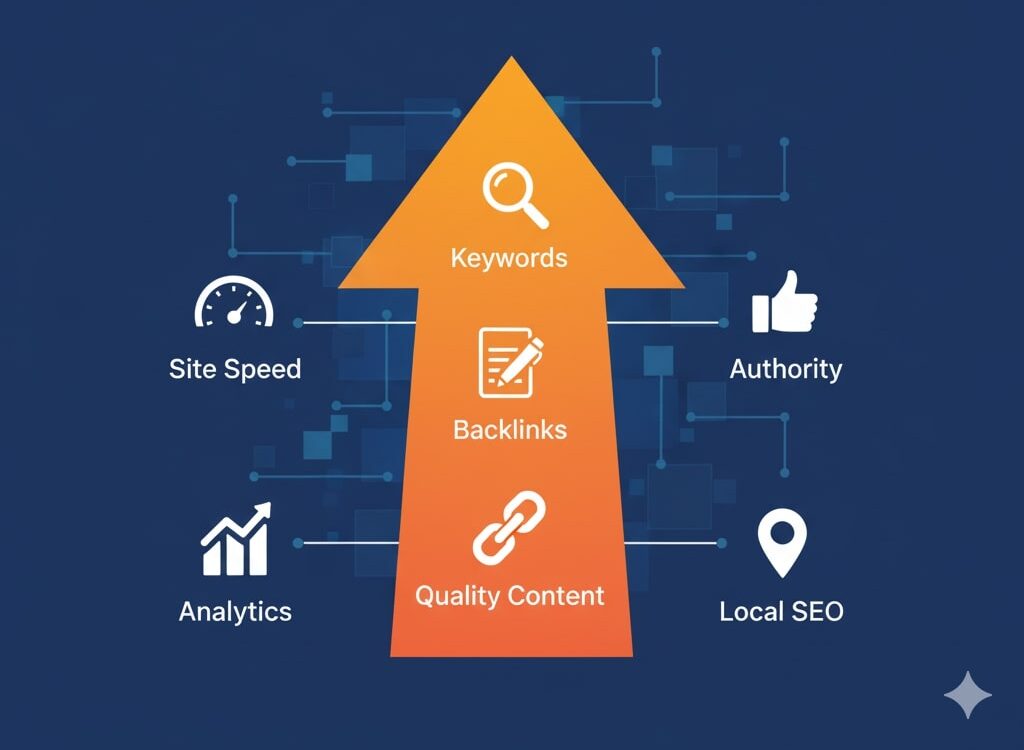
Search engines change, but good SEO habits last. If you want more traffic, more customers, and better visibility, follow these clear steps. You’ll get practical actions you can start doing right away.
Start with what search engines tell you
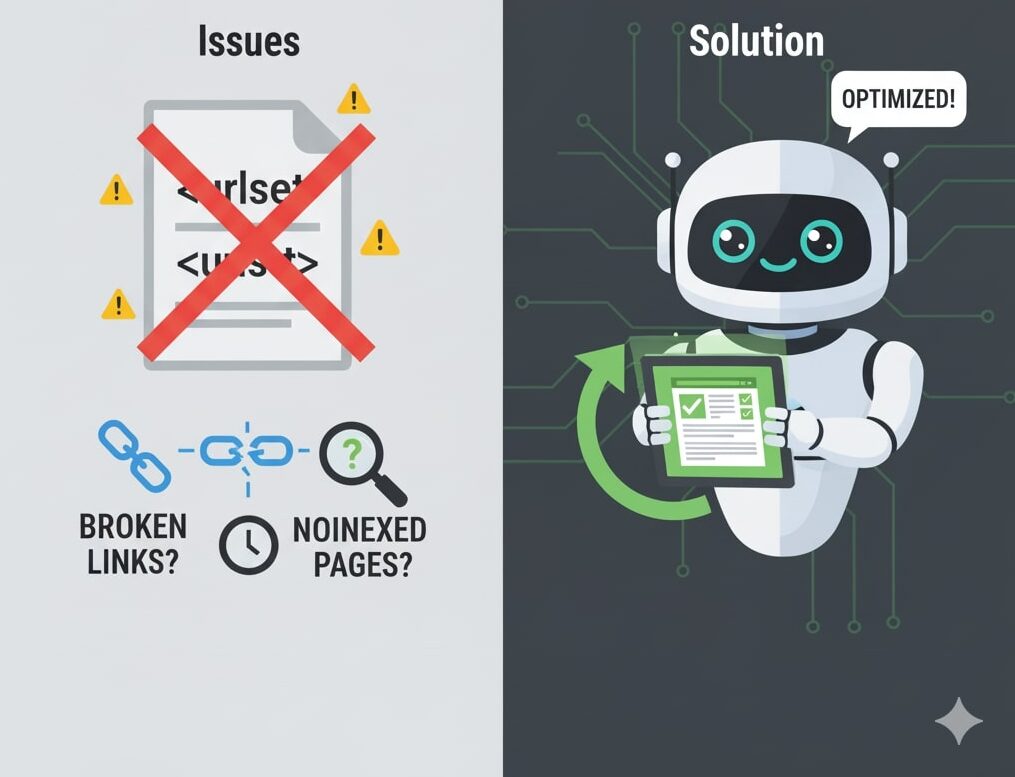
Make sure your site is crawlable and follows Google’s basic SEO guidance. If Google can’t reach your pages or understand your content, you won’t rank no matter how good the writing is. Use a sitemap, check robots.txt, and register your site in Google Search Console. These are the foundations. Google for Developers
1. Pick the right keywords (but think intent, not just volume)
You should choose keywords that match what people actually want. Ask: what problem are they solving? Use long-tail phrases (e.g., “best vegan bakery near me” or “how to fix slow WordPress load time”) because they convert better. Combine keyword tools (Ahrefs, SEMrush) with Google Autocomplete and people-also-ask boxes to find real search intent. TechRadar+1
Action: Make a short list of 10 primary + 20 long-tail keywords for your main pages.
2. Make pages for people first (content + user experience)
Write content that answers the user’s question fully and clearly. Use headings, short paragraphs, and bullet lists so readers scan easily. Also, make content that shows topical depth—cover the “what,” “why,” and “how” where relevant.
User experience matters: a slow, cluttered page will lose visitors and hurt rankings. Improve readability, use clear CTAs, and keep mobile users in mind. Page speed and mobile friendliness are ranking signals you can’t ignore. TechRadar+1
Action: Rewrite one underperforming page to make it simpler, add a clear subheading structure, and reduce load time.
3. On-page basics: titles, meta, headings, and schema
Every page needs:
- A concise title with your target keyword.
- A meta description that entices clicks (not just keywords).
- H1 for the main topic, H2/H3 for subtopics.
- LocalBusiness or Article schema when it fits—schema helps search engines understand your content better. Google for Developers
Action: Audit your top 10 pages and fix any missing or duplicate titles/meta descriptions.
4. Build quality links (focus on relevance and trust)
Backlinks still matter, but quality beats quantity. Get links from relevant sites in your niche, local organizations, industry blogs, and resource pages. Avoid low-quality link schemes; they can cause penalties.
Use outreach, guest posts, local partnerships, and digital PR to earn natural links. Tools like Ahrefs or Semrush help you discover competitor links you might also try to get. TechRadar+1
Action: Find 5 local or niche sites you can ask for a link this month.
5. Improve technical SEO (crawlability, speed, and structure)
Technical fixes often give the best ROI:
- Fix broken links and redirect chains.
- Use clean URL structures and canonical tags.
- Serve pages over HTTPS.
- Optimize images (compression + lazy loading).
- Ensure mobile-first design and good Core Web Vitals scores. OptinMonster
Action: Run a site crawl (Screaming Frog or a free site audit) and fix the top 10 technical issues.
Let’s see what this X user has shared about the role of Technical SEO in improving website speed and crawlability. Their insights highlight how even small technical fixes can make a big difference in search rankings.
6. Use internal linking to spread page authority
Link related pages to each other with meaningful anchor text. This helps search engines understand your site’s structure and improves user navigation. For example, on a post about keyword research, link to your internal guides like:
- /on-page-seo — “On-page SEO checklist”
- /keyword-research — “Keyword research guide”
- /site-speed — “How to speed up WordPress”
These internal links help search engines and keep users on your site longer.
Action: Add 2–3 internal links from high-traffic pages to lower-performing pages each week.
Here’s what a Reddit user shared about the power of internal linking in SEO. They explained how connecting related pages not only helps search engines crawl your site better but also keeps visitors engaged for longer.
7. Collect and reply to user reviews (especially for local businesses)
Reviews are social proof and influence local rankings. Ask customers to leave honest reviews and respond politely to both praise and complaints. This improves trust and often increases click-through rates from search results. Search Engine Land
Action: Create a simple “Leave a review” page or email template to request reviews after purchase.
8. Monitor, measure, and adapt
Use Google Analytics and Search Console to track impressions, clicks, and behavior. Look for pages with high impressions but low clicks (optimize title/meta), and pages with high bounce rates (improve content or UX). Track keywords regularly and test changes via A/B tests where possible. Search Engine Land
Action: Set up a monthly SEO dashboard with 5 KPIs: organic traffic, top landing pages, conversions, average position, and page speed.
9. Stay away from risky shortcuts
Avoid “parasite” or spammy content tactics that try to manipulate rankings without providing real value. Google is getting better at spotting low-value pages and can penalize sites that rely on manipulative practices. Focus on real value and original content. The Verge
Action: Remove or rework thin, duplicated, or low-value pages on your site.
10. Use AI and tools wisely (as helpers, not shortcuts)
AI writing and optimization tools can speed up research and drafts, but you must review everything for accuracy and originality. Use tools to discover gaps, optimize headings, and check readability—but always make the final content human and helpful. wix.com+1
Action: Try one AI-assisted content tool for drafting, then edit heavily before publishing.
Quick checklist you can follow this week
- Fix 5 technical issues from a site crawl.
- Update title/meta for 3 pages with high impressions and low clicks.
- Add 2 internal links from top pages to pages that need a boost.
- Ask 5 customers for reviews.
- Identify 5 link prospects and send outreach messages.
Internal link examples you can add (sample anchor text and URL)
- “Read our On-Page SEO Checklist” —
/on-page-seo - “Follow our Keyword Research Guide” —
/keyword-research - “Learn how to speed up your site” —
/site-speed - “See our complete SEO audit process” —
/seo-audit
(Replace these paths with your real site URLs.)
Final thought
You don’t need every trick in the book to rank better. Start with the basics: make your site easy to crawl, write content that helps real people, fix technical issues, and earn good links. Measure what you change and keep improving. If you do these things consistently, your SEO ranking will move up.

Vrushang Patel is an experienced SEO Analyst and Freelance SEO Specialist with over three years of expertise in boosting online visibility, rankings, and organic growth. Skilled in On-Page, Off-Page, Technical, and Local SEO, he focuses on creating sustainable strategies that deliver real results. When he’s not optimizing websites, Vrushang shares practical SEO insights to help businesses stay ahead in the digital world.